
Selling the Decision, Not the Square Metre
For years, competition between third party logistics providers has been settled on warehouse capacity, fleet size and price. The next contest will be over how well you can see the operation and how quickly you can turn what you see into the right decision.
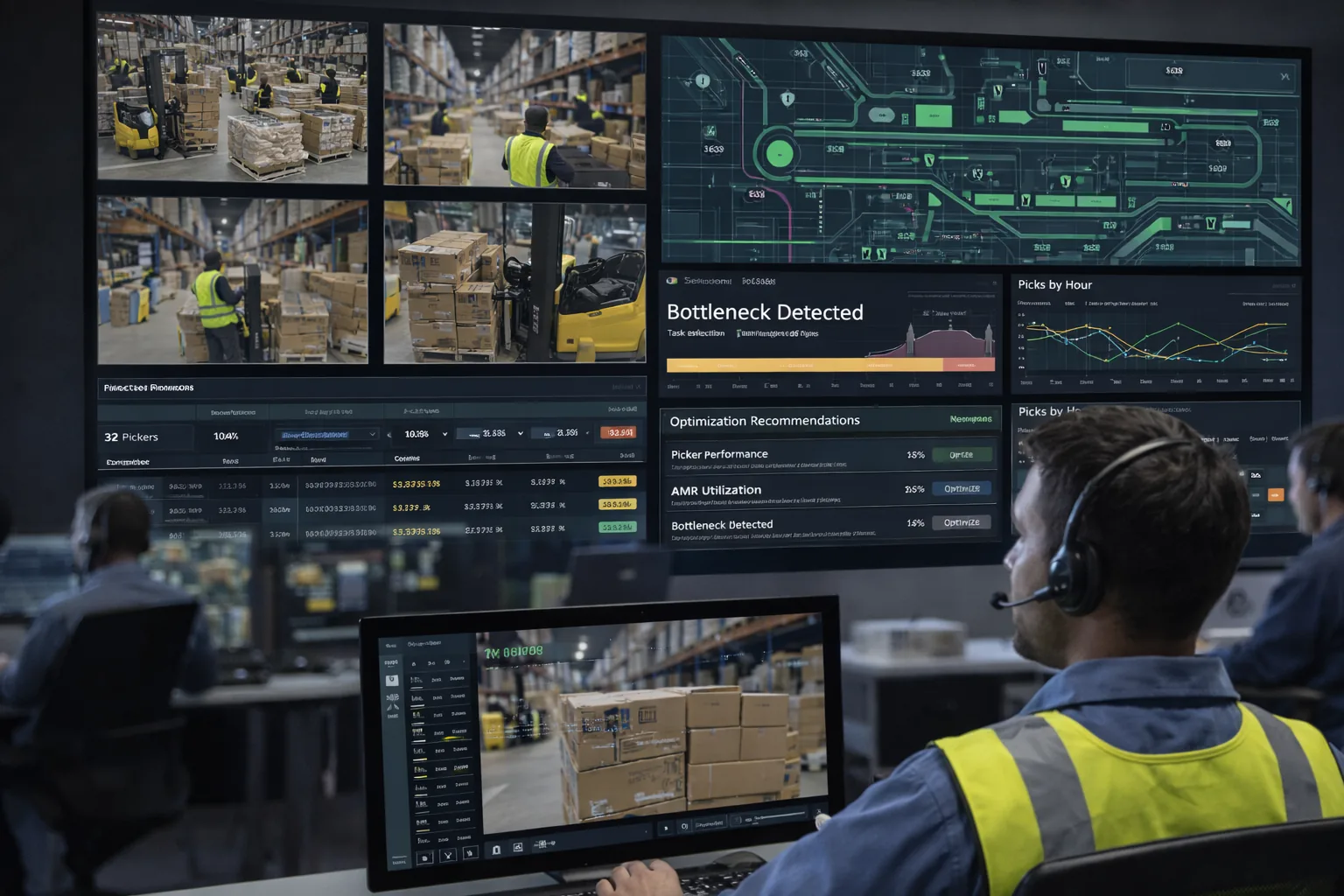
For years, competition among third party logistics providers has been settled on a short list of measures. Warehouse capacity, square metres, fleet size, labour and price. Customers weigh those variables against their own needs and budget, then pick the provider that fits best.
But supply chains have grown more tangled, and what customers want from a 3PL has shifted with them.
They no longer expect a provider simply to store goods, prepare orders and move shipments out the door. They want to see the state of their operation, catch problems as early as possible, and know what their options are once a problem does appear.
Visibility and Accountability in a 3PL Relationship
When a company hands a substantial part of its operation to a 3PL, the operational work moves outside the building. The promise made to its own customers does not move with it.
Orders prepared on time, enough people on the floor, vehicles arriving when they should, warehouse capacity holding up, shipments leaving as planned. All of it still lands directly on the customer's own performance.
So it matters that the customer can see not only how the operation ended but how it is going.
Learning about a problem once it has happened is no longer worth much. The value sits in seeing that a problem is likely and acting before it forms.
This matters even more for companies that work with several 3PLs at once.
It is common for a large company to use different logistics providers in different regions or countries, or for different services. One 3PL here, another one there, separate carriers on the international legs, and in some cases the company's own facilities.
Each of those companies can see its own operation. What is usually missing is anything that can take in the whole chain at once and read the relationships between the parties.
I think this is exactly where the opportunity for 3PLs opens up.
Square metres and service rates are easy to put side by side. The value created by a provider that understands its customer's operation better, spots risk earlier and weighs alternatives faster sits on an entirely different level.
How Agent Based AI Could Change 3PL Operations
Plenty of companies already use analytics and AI. Those systems study past performance, produce reports, generate forecasts and hand managers a set of indicators.
An agent based approach takes that one step further.
The difference is that the system does not stop at analysing data. Within defined rules and defined authority, it can use what it finds to weigh the options and then either propose an action or carry one out.
Take a system that works out capacity will run short in the warehouse during certain hours tomorrow.
A conventional system puts that in front of a manager as a report or an alarm.
An agent based system tries to understand why it is going to happen, which orders will be affected, and how the available options compare.
- It can look at which work could be pulled forward.
- It can assess which staff could be moved to another operation.
- It can examine which orders should take priority.
- It can compare alternative transport options and cost them out.
The manager then sees more than a flag saying capacity is short. They see what the problem is likely to cost and what can be done about it.
The system might show, for instance, that a particular change to the operation carries an extra cost but avoids a larger delay cost.
The point is not to take the decision away from the person.
Low risk, predefined steps can be handled automatically by the system, inside the authority it has been given.
Where the Real Difference Shows Up in a 3PL Operation
What makes this approach matter in third party logistics is that the operation does not happen inside one company.
Around the 3PL sit the customer, the customer's suppliers, carriers, terminals, customs brokers and, from time to time, the other 3PLs the customer works with.
So this is not a question of connecting departments within a single business. It is separate companies, each running independently, having to work as parts of the same operation.
An agent based model is therefore better understood not as an AI application but as a structure that brings operational information together across different systems and different companies.
Every company carries on using its own systems. Every company keeps control of its own data. Each one sets its own rules about what may be shared and what may be done.
Even so, the information that matters can move between systems within the limits each party has allowed.
Once that structure exists, the nature of what the 3PL sells starts to change.
The provider is no longer only storing and shipping goods. It becomes a partner that helps its customer see what is happening across the chain, notice risk earlier and weigh the alternatives.
Trust and the Limits of Authority in Data Sharing
Trust matters here as much as the technology does.
Several companies working inside the same operational structure must not mean that everyone can reach all of the data.
- The customer's data stays under the customer's control.
- The 3PL manages its own operational data.
- The carrier reaches only the information it actually needs.
What the AI agents are allowed to do needs to be written down just as plainly.
A system might be cleared to act on its own up to a certain cost. Anything above that, or anything that could move the service level promised to the customer, goes to a person for approval.
All of it has to be logged.
From Control Tower to Supply Chain Orchestration
The larger opportunity may be that none of this has to stop at the provider's own operation.
Picture a 3PL that can see its customer's other logistics providers, carriers and terminals through the same control tower.
If the customer works with three different 3PLs, each provider would normally see only its own slice.
A control tower sitting above them can pull information from all of those operations together and give the customer a view of the whole.
At that point the provider's role begins to change as well.
It is no longer just one of the customer's logistics suppliers. It can take a more central part in coordinating the work that runs across all of them.
This is the thinking behind what the industry calls 4PL, or the control tower model.
I think there is a real strategic opportunity here for 3PLs.
A provider that only supplies warehouse space or transport can be swapped for another one. Replacing a partner that coordinates a customer's logistics operations and sits inside its daily decisions is a far bigger undertaking.
Technology, in other words, can make the customer relationship both longer and more strategic.
Adding a New Layer Without Replacing the Systems You Have
None of this requires a 3PL to rip out its WMS, TMS or ERP.
The customer's systems do not need rebuilding either.
An agent based structure can be designed as a new layer running on top of what is already in place.
The existing systems carry on producing operational data and executing transactions. The new layer brings information from all of them together and works out where the operation actually stands.
The cycle is straightforward:
- A signal appears.
- The system assesses it.
- It examines the likely outcomes and the options.
- It proposes a suitable action, or carries it out if that falls within its authority.
- It then follows the result.
A capacity problem can be caught before it forms. A delay risk on an order can surface earlier. A change to a transport plan can be measured for cost against its effect on service level.
Used this way, AI is not another reporting screen. It becomes part of how decisions actually get made, day by day.
Offering the Technology as a Service in Its Own Right
The point for 3PLs is that this technology should not be treated purely as an internal cost exercise.
It is also something to put in front of the customer.
A provider need not walk into a tender carrying only square metres, vehicle counts and a rate card.
Alongside those, it can offer higher visibility, early warning, capacity planning, exception management and coordination across the customer's other logistics providers.
Over time this can reshape the revenue model as well.
The customer is no longer buying only physical storage or transport. It is also drawing on the technology and decision support the provider brings, in order to run its own operation better.
That can make the relationship between the customer and the provider considerably stronger.
The New Competitive Ground in Third Party Logistics
Physical capacity and price will of course keep mattering in the years ahead.
But I think a new field of competition is being added next to them.
Customers do not want to hear about problems after the fact. They want the likelihood of a problem visible as early as possible. They want to know what the alternatives cost. And when it comes to it, they want help choosing which one to run with.
So the strong 3PLs of the coming years will not simply be the ones with the most warehouse space or the largest fleets.
The providers that see their customer's operation more clearly, notice risk sooner, bring information together across the parties involved and speed up decisions will end up in a stronger position.
The opportunity in front of 3PLs is not to put technology in place of the operation. It is to make technology the instrument through which the operation is run better.
When that happens, a 3PL stops being only a storage and transport supplier to its customer.
It becomes a part of the supply chain that is more visible, better coordinated and quicker to decide.
In my view, that is precisely where the next serious competition in this sector will take shape.
Square metres will still matter. Price will still matter. But being able to help a customer run its chain better creates a far stronger and more durable form of differentiation.